Method 01
Ultrasonic & Advanced UT
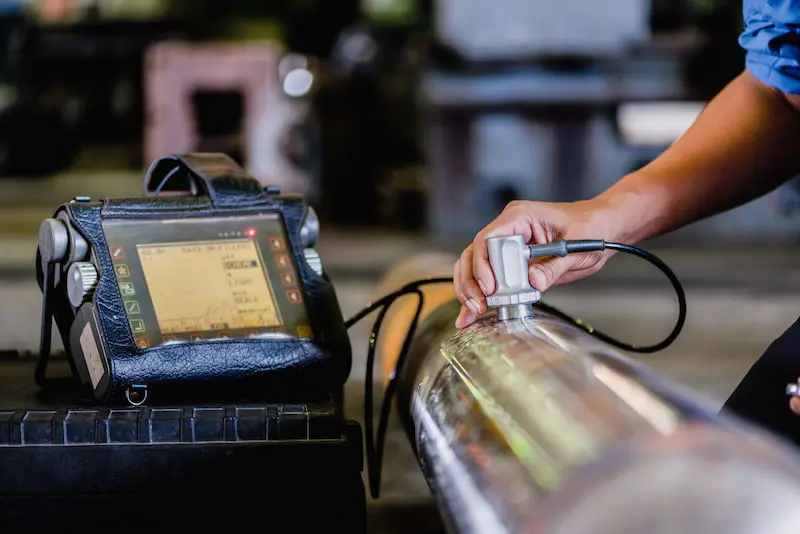
Ultrasonic Testing (UT) for flaw detection and thickness measurement, together with Phased Array Ultrasonic Testing (PAUT) for advanced weld inspection.
Non-Destructive Testing (NDT) allows Uniquo's ASNT-qualified technicians to evaluate the integrity of materials, welds, and components without causing any damage. NDT is essential for operating plants, aging equipment, new fabrications, pressure systems, and infrastructure where failure could have catastrophic consequences.
UNIQUO supports plant operators, fabricators, and infrastructure teams with inspection methods designed to reveal hidden defects before they become operational failures. Our field-ready NDT teams help clients assess condition, maintain safety, and support inspection decisions across fabrication, shutdown, and in-service environments.
Our NDT services cover conventional and advanced methods for flaw detection, thickness measurement, weld examination, tube inspection, and fabrication quality control.
Ultrasonic Testing (UT) for flaw detection and thickness measurement, together with Phased Array Ultrasonic Testing (PAUT) for advanced weld inspection.
Radiographic Testing (RT) for weld inspection using X-ray or gamma ray imaging to detect internal discontinuities.
Magnetic Particle Testing (MPT) and Liquid Penetrant Testing (LPT / DPT) for near-surface defects, cracks, porosity, and surface-breaking flaws.
Eddy Current Testing (ECT) for tube inspection and conductivity checks, plus Visual Testing (VT) for systematic visual examination.
NDT supports both pre-service and in-service reliability by helping clients inspect weld quality, monitor corrosion, and assess plant or fabrication conditions during critical maintenance windows.
Our NDT assignments are structured to help clients understand asset condition without damaging the component under examination, making it easier to support maintenance planning, quality decisions, and risk reduction across critical equipment and structures.
Defects, thickness loss, and weld-related discontinuities can be identified before they progress into service failures.
Clients receive structured findings that support shutdown planning, fabrication acceptance, and in-service integrity decisions.