
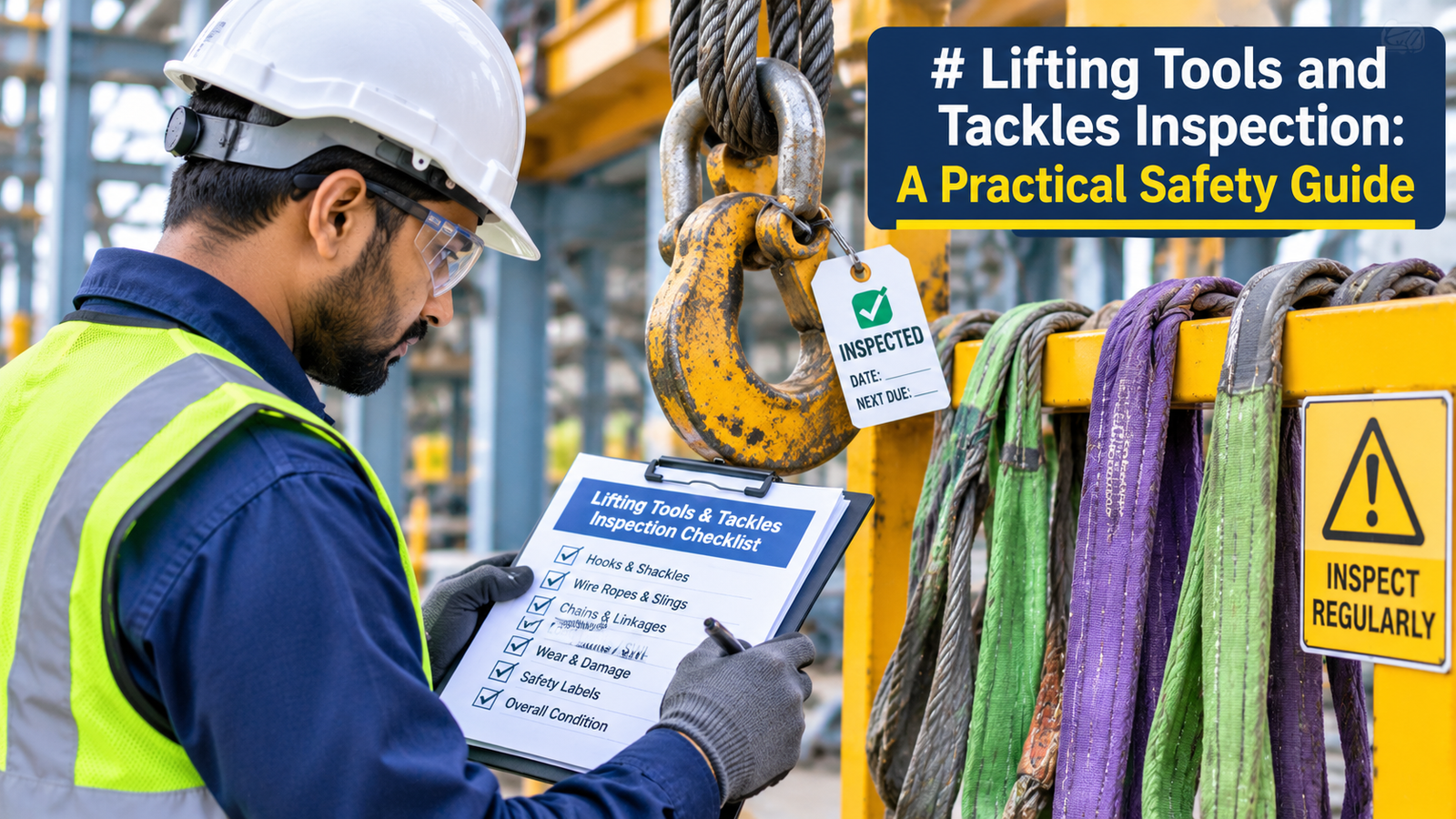
Every lifting operation depends on a chain of components working together: the lifting machine, the attachment, the sling or chain, the connection points and the load itself. A damaged or incorrectly selected accessory can compromise the whole lift. A planned lifting tools and tackles inspection helps organisations identify condition concerns, verify identification and keep records that support safe equipment management.
This guide is intended as an overview for site managers, maintenance teams, safety professionals and contractors. It does not replace the equipment manufacturer’s instructions, a competent person’s examination or the requirements applicable to a particular workplace and state.
What are lifting tools and tackles?
Lifting tackles are accessories used with lifting machines to connect, secure or handle a load. Depending on the operation, a site inventory may include wire-rope slings, chain slings, synthetic webbing slings, round slings, shackles, hooks, rings, swivels, lifting beams, chain blocks, lever hoists and below-the-hook devices.
Each item has its own design limits and inspection considerations. A checklist suitable for a chain sling is not automatically suitable for a synthetic sling or a shackle.
Why regular examination is important
Accessories are exposed to repeated loading, impact, abrasion, bending, heat, chemicals, outdoor storage and handling damage. These conditions can cause deterioration that is not always obvious during a hurried pre-use check. Planned examinations provide a more systematic opportunity to identify defects, confirm markings and decide whether an item should remain in service, be referred for further assessment or be removed from use.
Indian legal context
India’s legal framework changed after the Occupational Safety, Health and Working Conditions Code, 2020 (OSH Code) was brought into force on 21 November 2025. Section 143 of the Code provides for repeal of the Factories Act, 1948 from the relevant commencement date. The Code’s Second Schedule includes matters relating to lifting machines, chains, ropes and lifting tackles. Employers and contractors should therefore check the OSH Code, applicable Central and State rules, relevant sector-specific requirements and any transitional provisions that apply to their establishment. Do not rely on older summaries of the Factories Act as a statement of the current legal position.
Refer to the Occupational Safety, Health and Working Conditions Code on India Code and the Ministry of Labour and Employment announcement on commencement. This article is general information, not legal advice.
What should inspectors examine?
Wire-rope slings
Checks may include broken wires, corrosion, kinks, crushing, bird-caging, distortion, damaged terminations, ferrules and identification tags. The inspection method and rejection criteria must follow the applicable standard, manufacturer guidance and the sling’s construction.
Chain slings
Look for stretched or distorted links, wear, cracks, gouges, corrosion, damaged connecting components and illegible identification. Components should be compatible and used within their rated configuration.
Synthetic webbing and round slings
Inspect for cuts, tears, abrasion, damaged stitching, heat glazing, chemical attack, knots, exposed load-bearing fibres and unreadable labels. Synthetic slings can be weakened without obvious metal deformation, so careful examination and correct storage matter.
Hooks, shackles and lifting points
Review deformation, cracks, corrosion, excessive wear, damaged threads or pins, safety latch condition, throat opening and signs of unauthorised modification. Do not attempt to repair or straighten a component unless an approved process permits it.
Hoists and lifting beams
Depending on the scope, examination may cover load chain or wire rope, hooks, brakes, controls, limit devices, structural condition, identification and evidence of maintenance. Operational tests should be planned and performed only under an approved safe procedure.
Common warning signs on site
- Missing, damaged or unreadable identification and safe working load markings.
- Visible cuts, broken wires, corrosion, deformation or cracked components.
- Evidence of heat, chemical or mechanical damage.
- Improvised connections, incompatible accessories or unauthorised repairs.
- Accessories stored in a way that exposes them to moisture, sharp edges or contamination.
- Inspection records that cannot be matched to the physical asset.
Inspection, pre-use checks and load testing are different
A pre-use check is a task-level check before equipment is used. A thorough examination is a more detailed assessment carried out by a competent person at the required interval or trigger. Load testing is a controlled test under a defined procedure and is not a substitute for a thorough examination. The need for a test, its load, method and acceptance criteria should be established from the applicable regulation, standard, manufacturer instructions and engineering assessment. Avoid applying a universal test percentage to every item.
Building a reliable lifting accessory register
- Give each item a unique identification reference.
- Record type, manufacturer, rated capacity, configuration and location.
- Keep purchase, repair, examination and test documents together.
- Define how damaged or overdue items are quarantined and prevented from use.
- Track corrective actions and re-examination before return to service.
- Train users to recognise damage and report concerns immediately.
How UNIQUO supports lifting tools and tackles inspection
UNIQUO’s listed inspection scope includes wire-rope and chain slings, synthetic slings, shackles, hooks, lifting beams, hoists and below-the-hook devices. The team describes a process involving scope review, site inspection and a report with observations. Confirm the precise asset types, applicable criteria and deliverables before engagement.
Learn more about UNIQUO lifting tools and tackles inspection or request an assessment through Contact Us.
Conclusion
A dependable lifting accessory programme combines correct selection, pre-use checks, competent examination, traceable identification, appropriate storage and prompt removal of defective items. Treat the inspection register as an active safety control—not simply a folder of certificates.