
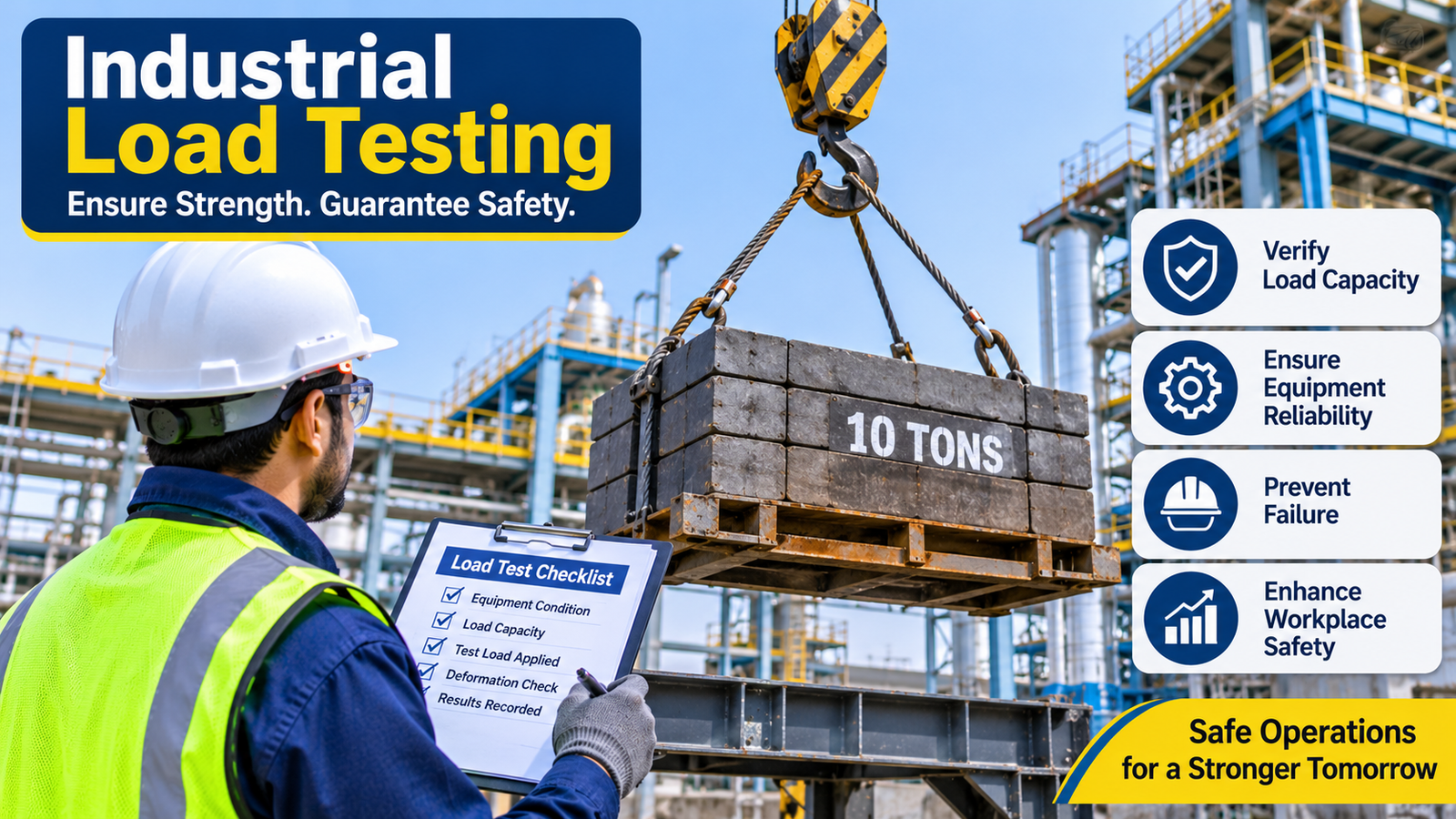
Equipment and structures used to lift, support or move loads must be suitable for their intended application. Industrial load testing is one way to verify performance under a defined test condition. It may be specified for lifting equipment, lifting accessories, anchors, platforms, supports and selected structural or civil applications.
A load test is a controlled engineering activity—not simply placing extra weight on an asset. The test objective, load, method, safety controls and acceptance criteria must be established before work begins. A percentage or procedure that is appropriate for one equipment class must not be assumed to apply to another.
What is load testing?
Load testing applies a specified load to an item under controlled conditions and observes its response. Depending on the asset and governing requirement, the test may evaluate proof strength, functional performance, deflection, stability, movement or the behaviour of a supporting system.
Common types of load testing
Static load testing
A static test applies a defined load while the item remains stationary or under a controlled hold condition. The procedure may specify load increments, hold periods, measurements and post-test examination. It is used where the test objective concerns response under a sustained load.
Dynamic load testing
A dynamic test evaluates performance while equipment moves or operates under a specified load. For lifting machinery, this may involve controlled operating movements and checks of relevant functions, brakes or controls as defined by the approved procedure.
Proof-load testing
A proof-load test applies a prescribed test load to demonstrate that the item withstands the specified test condition. The required load and duration must come from the applicable regulation, product standard, manufacturer instruction, contract or engineering-approved procedure. There is no universal proof-load percentage for every crane, sling, anchor or structure.
Structural and civil load testing
Some projects require testing of floor systems, platforms, racks, anchors, jetties or other structural elements. These tests need an engineering-defined loading arrangement, instrumentation where required, exclusion zones and clear limits for stopping the test.
Which equipment may require load testing?
- Overhead, gantry, jib, mobile and tower cranes where the applicable requirements call for it.
- Hoists, lifting beams, spreader beams and selected below-the-hook devices.
- Anchors, eye bolts and selected fastening systems under a defined test plan.
- Storage racks, mezzanine floors, platforms and support structures where specified.
- Selected civil and marine structures where an engineer has defined the test objective.
Not every item requires the same test, and some equipment is assessed through other examination or verification activities. Confirm the requirement for the specific asset before scheduling work.
How to plan a safe load test
1. Confirm the test requirement
Identify the asset, rated capacity, intended use, governing documents and reason for testing. Confirm whether the activity is initial, periodic, post-repair, post-modification or project-specific.
2. Review the engineering basis
Agree the test load, loading sequence, hold duration, measurement points, acceptance limits and stop criteria. Check the supporting structure, anchorage and load path—not only the item being tested.
3. Assess site risks
Plan access, permits, isolations, exclusion zones, communications, weather conditions and emergency arrangements. Only authorised personnel should enter the controlled test area.
4. Verify equipment and instrumentation
Confirm the condition and suitability of test weights, load cells, dynamometers, gauges and other measuring devices. Calibration status and measurement range should be appropriate to the test.
5. Execute and record the test
Follow the approved sequence. Record applied loads, readings, observations, interruptions and any abnormal behaviour. Stop if a defined limit or unsafe condition is reached.
6. Review and close out
Compare results against the pre-agreed acceptance criteria. Record limitations and corrective actions. Do not return an asset to service until the responsible authority has reviewed the result and authorised release.
What can cause a load test to fail or become inconclusive?
Common issues include an unsuitable test arrangement, incorrect asset identification, inadequate support capacity, unreliable measurement equipment, unclear acceptance criteria, unexpected movement, deformation or incomplete records. A test should not proceed when the load path or safety controls cannot be established with confidence.
Load testing versus inspection
Inspection examines condition and evidence against a defined scope. Load testing evaluates response under a specified load condition. One does not automatically replace the other. A complete equipment assurance plan may require document review, thorough examination, functional checks and a load test in a sequence defined by the applicable requirement.
How UNIQUO supports load testing
UNIQUO lists load testing for lifting equipment and selected structural or civil applications, including cranes, platforms, racks, mezzanines and other assets. The actual service scope, test method and acceptance basis should be agreed for each asset before mobilisation.
Read about UNIQUO load testing services or contact the team with the equipment type, rated capacity, quantity and site location.
Conclusion
A safe and useful load test begins with the correct engineering basis. Define the purpose, confirm the test load and acceptance criteria, assess the complete load path, control access and document every relevant result. This makes the test more meaningful for equipment owners, contractors and project teams.